
Blog · From Episode 3 of the Podcast
Did Jesus Pray Like Muslims? How the Prophets Prayed
A short summary of Episode 3, in plain words, with examples from our daily life.
“GOD is my Lord and your Lord; you shall worship Him alone. This is the right path.”
[3:51]
Episode 3 · Common Ground · 21 October 2026 · 21 min
Did Jesus Pray Like Muslims? What the Bible and the Quran Both Say
This post is a written summary of Episode 3 of our podcast. You can read it here, and listen to the full episode whenever you have time.
In Short
On the night he was arrested, Jesus fell face down to pray. Abraham and Moses prayed the same way, and the Quran tells Mary to prostrate as well. The prophets prayed at set times, and they washed before they prayed. Every prayer was for God alone, so Muslims who pray this way are following the prophets, Jesus among them.
Think about the last time we got really bad news. Maybe it was a phone call in the kitchen. Many of us sit down without thinking. Some of us drop to our knees.
The Gospel tells us that Jesus did something like this on his last night. He went a little farther into the garden, fell face down and prayed. That is the same position Muslims pray in, five times a day.
In Episode 3, we read the Bible and the Quran side by side to see how the prophets prayed. Let's go through what we learned together, in four parts.
Falling Face Down Before God
Here is the moment in the Gospel of Matthew:
Going a little farther, He fell facedown and prayed, “My Father, if it is possible, let this cup pass from Me. Yet not as I will, but as You will.”Matthew 26:39 · Berean Standard Bible
Jesus did not look up at the sky and ask politely. He put his face to the ground. The prophets before him prayed the same way. The Torah tells us that Abraham fell face down when God spoke to him. Moses and Aaron did the same at the Tent of Meeting:
Then Abram fell facedown, and God said to him,Genesis 17:3 · Berean Standard Bible
Then Moses and Aaron went from the presence of the assembly to the entrance to the Tent of Meeting. They fell facedown, and the glory of the LORD appeared to them.Numbers 20:6 · Berean Standard Bible
The Quran carries the same prayer forward. The angels spoke to Mary, the mother of Jesus:
“O Mary, you shall submit to your Lord, and prostrate and bow down with those who bow down.”[3:43]
God also commands all the believers: “O you who believe, you shall bow, prostrate, worship your Lord, and work righteousness, that you may succeed.” [22:77] He tells us this way of praying is old. About the believers, He says “Their marks are on their faces, because of prostrating. This is the same example as in the Torah.” [48:29]
Why the face on the ground? Think about a job interview. We sit up straight and try to look important. Our body shows what is going on inside us. Now picture our forehead on the floor. It is very hard to feel proud down there. The head goes lower than the heart, and pride has nowhere to stand.
So far, we have seen that the prophets fell face down before God. Next, let's look at how they kept that humble heart through the day.
Coming Back to God Through the Day
Many of us feel close to God early in the morning. Then the day starts. By the afternoon, after the traffic and the emails, that feeling is gone. The prophets had an answer for this. They prayed at set times.
The Bible tells us that Daniel was a busy official in Babylon. Still, he stopped to pray three times a day, with his windows open toward Jerusalem:
Now when Daniel learned that the document had been signed, he went into his house, where the windows of his upper room opened toward Jerusalem, and three times a day he got down on his knees, prayed, and gave thanks to his God, just as he had done before.Daniel 6:10 · Berean Standard Bible
Even after Jesus, Peter and John went to the temple at the hour of prayer, in the Book of Acts. The Quran also gives the believers one direction: “Wherever you may be, all of you shall turn your faces towards it.” [2:144] That is the Sacred Masjid in Mecca. Facing one place helps a busy mind come home.
The Quran tells us these prayers came through Abraham and his family. God says “we taught them how to work righteousness, and how to observe the Contact Prayers (Salat) and the obligatory charity (Zakat).” [21:73] That “We” is God speaking. Jesus was given the same duty. As a baby, he said God “enjoined me to observe the Contact Prayers (Salat) and the obligatory charity (Zakat) for as long as I live.” [19:31] The Gospel of Mark tells us how early he got up to pray:
Early in the morning, while it was still dark, Jesus got up and went out to a solitary place to pray.Mark 1:35 · Berean Standard Bible
That is the time of the dawn prayer. It comes before the noise of the day rushes in.
Before the prayer, there is one more step. Think about visiting a friend and taking off our shoes at the door. It keeps the floor clean. It also tells us we are stepping into a special place. Washing before prayer works the same way. God commands the believers:
O you who believe, when you observe the Contact Prayers (Salat), you shall: (1) wash your faces, (2) wash your arms to the elbows, (3) wipe your heads, and (4) wash your feet to the ankles.[5:6]
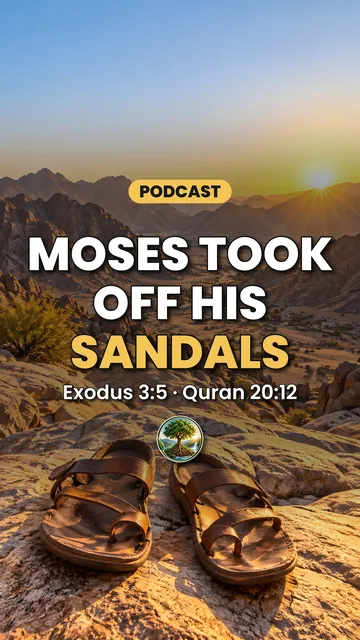
The Torah gave Aaron and the priests a similar rule. They washed their hands and feet with water before they entered the Tent of Meeting. At the burning bush, God also told Moses to take off his sandals:
“Do not come any closer,” God said. “Take off your sandals, for the place where you are standing is holy ground.”Exodus 3:5 · Berean Standard Bible
The Quran tells the same moment. God said to Moses “remove your sandals. You are in the sacred valley, Tuwã.” [20:12] Please look at what God said next:
I am GOD; there is no other god beside Me. You shall worship Me alone, and observe the Contact Prayers (Salat) to remember Me.[20:14]
So far, we have seen how the prophets kept coming back to God through the day. Next, let's look at who all this prayer is for.
Every Prayer Is for God Alone
All these steps clear away the noise. They point us to one place. When the devil tempted Jesus in the desert, Jesus answered him with the words of the Torah:
“Away from Me, Satan!” Jesus told him. “For it is written: ‘Worship the Lord your God and serve Him only.’”Matthew 4:10 · Berean Standard Bible
Later, someone asked Jesus for the most important commandment. In the Gospel of Mark, he began with the oneness of God. The Quran gives us the same message from Jesus:
“GOD is my Lord and your Lord; you shall worship Him alone. This is the right path.”[3:51]
We want to be fair here. Christians and Muslims see Jesus differently. Most Christians believe he is the son of God. In the Quran, Jesus says “I am a servant of GOD. He has given me the scripture, and has appointed me a prophet.” [19:30] That difference is real. Still, when Jesus taught about worship, his message was clear. Worship God alone.
Then we went back to the garden. Jesus knew what was coming, and he was afraid. In the Gospel of Luke, he prayed:
“Father, if You are willing, take this cup from Me. Yet not My will, but Yours be done.”Luke 22:42 · Berean Standard Bible
Not my will, but Yours. That is what the word Muslim means. A Muslim is a submitter, someone who puts God's will above their own. The disciples of Jesus used this word for themselves: “we believe in GOD, and bear witness that we are submitters.” [3:52] Abraham said it too: “I submit to the Lord of the universe.” [2:131] The Quran gives us words to say about our whole life:
My Contact Prayers (Salat), my worship practices, my life and my death, are all devoted absolutely to GOD alone, the Lord of the universe.[6:162]
Prayer can also turn into a show. Picture a family dinner where someone prays a long, loud prayer. Everyone at the table is impressed. But was the prayer for God, or for the guests? Jesus warned about this:
And when you pray, do not be like the hypocrites. For they love to pray standing in the synagogues and on the street corners to be seen by men. Truly I tell you, they already have their full reward.Matthew 6:5 · Berean Standard Bible
The Quran warns about people who pray but are “totally heedless of their prayers.” [107:5] It says “They only show off.” [107:6] True prayer is for God, and God is close: “I am always near. I answer their prayers when they pray to Me.” [2:186]
So far, we have seen that every prayer is for God alone. Last of all, let's look at the five daily prayers and what they mean for us.
The Five Daily Prayers and What They Mean for Us
Many people ask where the five daily prayers are in the Quran. God tells us “the Contact Prayers (Salat) are decreed for the believers at specific times.” [4:103] The times are given across the Quran.
The Dawn Prayer and the Night Prayer are both named in [24:58]. The noon prayer is “when the sun declines from its highest point at noon” [17:78]. The afternoon prayer is “the middle prayer” [2:238]. The sunset prayer is at “both ends of the day” [11:114], with the dawn prayer.
So why does the Quran not list every step, like a manual? The people already knew how to pray. The Quran calls it “the religion of your father Abraham. He is the one who named you ‘Submitters’ originally.” [22:78]
Think about a family recipe card. It does not say turn on the stove or chop the onions. It expects us to know those steps, because we grew up watching in the kitchen. Bowing and prostrating were passed down the same way, from Abraham to his children.
This changes how we see the world. Picture walking past a park and seeing a Muslim family praying with their faces on the grass. It may look strange at first. Now we can also see the garden where Jesus prayed.
From the moment the alarm goes off, our days push us to be in control. Putting our face to the floor is the opposite. We admit that God is in charge, and we are not.
So, did Jesus pray like Muslims? It is more accurate to say that Muslims who pray this way are following the prophets. Abraham, Moses, Mary, Jesus and Muhammad all bowed down to the same God.
Something to Try This Week
This week, please try one prayer with your face to the ground. It can be early in the morning, before the house wakes up. Let's read [6:162] first, and mean it.
Do you have a Christian friend or neighbour? You can ask if they have ever prayed this way. Then please listen to what they say.
Quick Answers
Here are the questions from the episode, each with a short answer.
Did Jesus pray like Muslims? Yes. He fell face down to pray, the way God told Mary to pray [3:43].
Why did the prophets fall face down? It is the humble way to worship, and it is the same example as in the Torah [48:29].
How did they stay humble all day? They prayed at set times [4:103].
Why face one direction? God gave the believers one direction, wherever they are [2:144].
Did Jesus pray at set times too? Yes. God enjoined him to observe the Contact Prayers for as long as he lived [19:31].
Why wash before praying? God commands us to wash before the Contact Prayers [5:6].
Who is all this prayer for? God alone [20:14].
Where do Christians and Muslims differ? On who Jesus is. In the Quran, he is a servant of God and a prophet [19:30].
Can prayer become a show? Yes, and the Quran warns those who only show off [107:6].
Where do the five daily prayers come from? Their times are given across the Quran [4:103].
Why doesn't the Quran list every step? The prayers were already known, as the religion of Abraham [22:78].
Shorts From This Episode
Each Short is one moment from the episode, about a minute long. Please press one to watch it here.


Growth Prompt
Please take a few quiet minutes with [6:162]. Read it slowly, and think about the day ahead of you. Each part of it can be given to God.
Where in my day am I trying to stay in control, and what would change if I said to God, not my will but Yours?
Keep growing
Every topic on this site connects to the others. Here is where this page leads next.